
Treatment When the Vestibular System Is Compromised
Located in your inner ear (specifically the semicircular canals), the vestibular system is responsible to help you to maintain balance and spatial orientation, and to coordinate eye movement. The vestibular system (along with vision and proprioception) provides sensory feedback to your brain about head position, allowing you to stand upright, move steadily, and stay focused while you are in motion.
When the vestibular system is not working as it should, your balance and orientation are disrupted. You may develop symptoms such as dizziness, vertigo (the sensation of spinning), unsteady walking, blurry vision, headaches, nausea and even vomiting. Vestibular symptoms are difficult to bear and not something which resolves easily by “waiting it out”. When this happens, vestibular physiotherapy or vestibular rehabilitation therapy (also known as vestibular rehab or VRT) is needed to restore normal function of the vestibular system.
What Is Vestibular Physiotherapy?
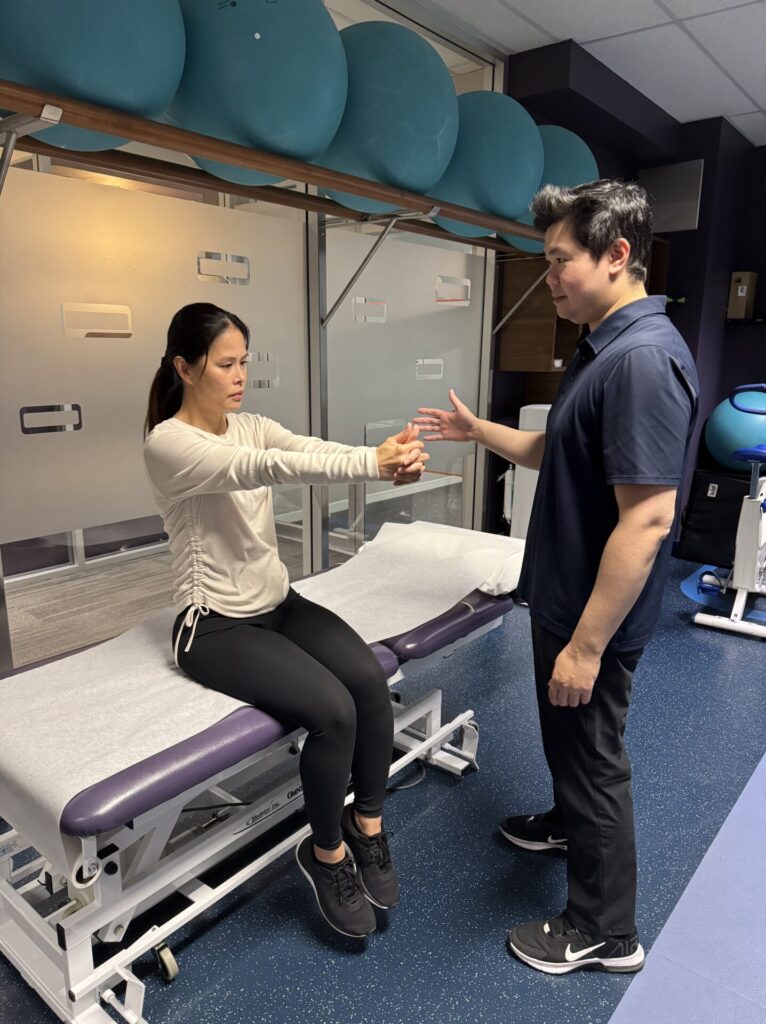
Vestibular physiotherapy addresses the vestibular system housed in your inner ear and brain. It consists of performing specific head maneuvers, prescribing adaptation exercises and educating patients on self-management strategies. Another goal of treatment is to retrain the brain to compensate for deficits related to vestibular dysfunction. Vestibular physiotherapy may also be indicated for post-concussion patients who suffered a head trauma from a motor vehicle accident or a sports injury.
At our clinic, physiotherapist Jason Tong has post-graduate training to provide vestibular rehab to help patients who are suffering from conditions such as benign paroxysmal positional vertigo (BPPV), Ménière’s disease, labyrinthitis, vestibular neuritis, vestibular migraines and cervicogenic dizziness.
Based on the assessment findings, Jason will prescribe individualized adaptation, habituation and balance exercises to improve the function of the vestibular system. He will also screen for relevant head, neck and upper back issues which may contribute to vestibular disorders. Adaptation exercises teach the brain to adapt to new input through repeated head and eye movements, and restore gaze stability. Habituation exercises use gradual exposure to desensitize the brain to movements that trigger symptoms. Finally, dynamic and static balance exercises improve stability and coordination by challenging your balance in standing, walking and while turning.
Book an appointment with Jason to get help for your dizziness and vertigo symptoms today.